
Size Guide
Understanding Mylulusstore Sizing


Description
xTolmiea menziesii
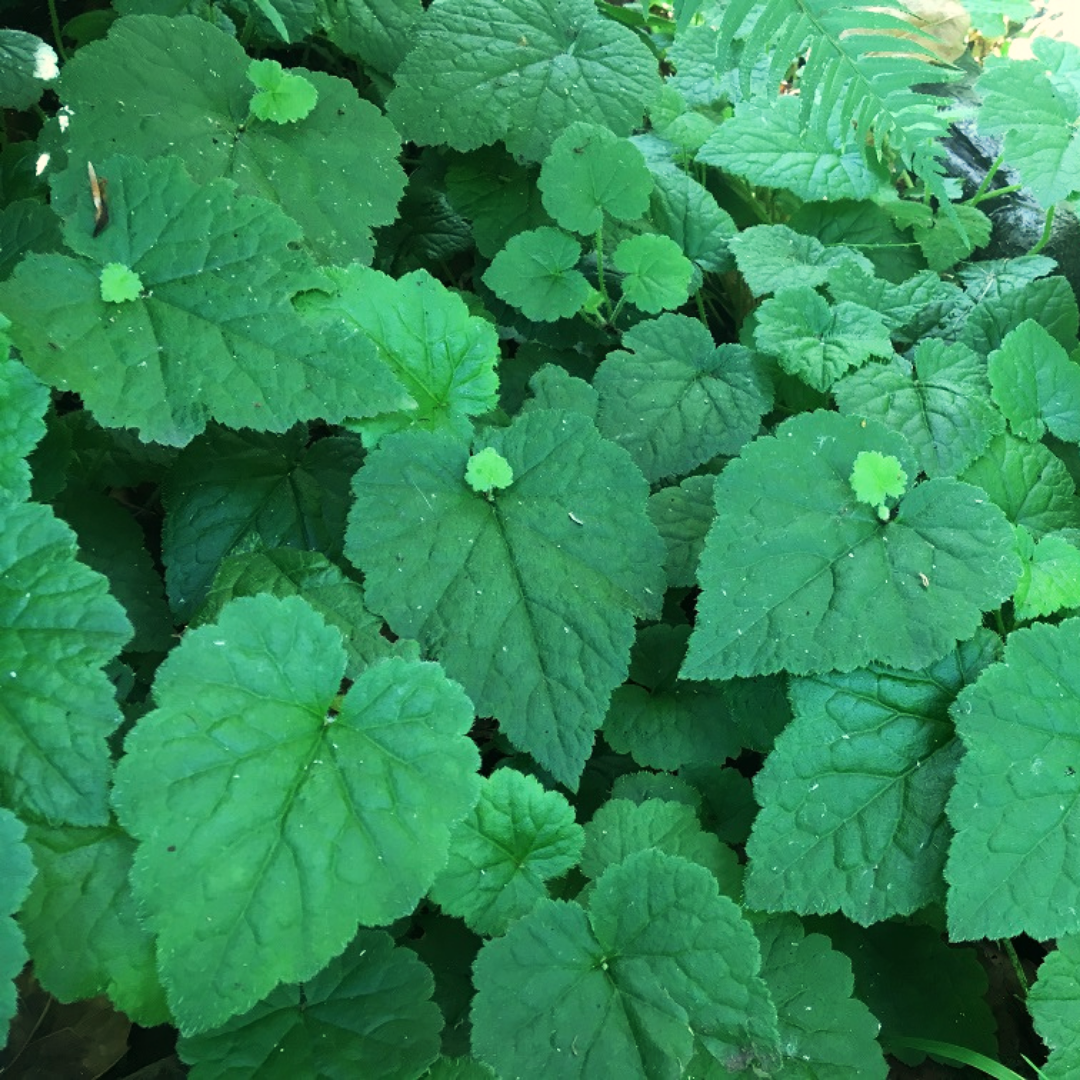
Piggyback plant, also known as youth-on-age, is a lush herbaceous plant that lures pollinators into the woodland garden. Dense mounds of mostly-evergreen foliage spread easily, resulting in attractive colonies in moist understory areas. In spring, elongated maroon flowers bloom along stalks dangling up to two feet above the foliage. It's aptly named due to its adorable growth habit, where baby plantlets develop on the tops of mature leaves; the youth literally piggy-backing off the old.
- Plant type/canopy layer: deciduous, perennial, herbaceous plant
- Size at maturity: foliage is usually 8-12" tall, flower stalks stand up to 36" tall, 12-24" wide
- Light requirements: full shade, part-sun/part-shade
- Moisture requirements: moist soil
- Bloom time: April - August
- Growth rate/ease: fast growing, easy to grow
- Wildlife support: flowers attract and provide nectar to adult butterflies, bees and other insect pollinators; overall plant supports beneficial and pest eating insects
- Native habitat/range: grows in moist forests and along streambanks, mostly west of the Cascades, across the Pacific Northwest. Portland Plant List - yes.
- Special features & uses: mostly-evergreen; quickly spreading groundcover; landscape uses include pollinator gardens and woodland gardens
Gardening with Piggyback Plant: Piggyback plant prefers shady areas with moist soil that's high in organic matter (leave the leaves!). Though it can be an aggressive spreader, this is usually welcomed since it creates a lush, fuss-free groundcover almost year-round. Dry or otherwise disturbed soils will inhibit its advance.
Companion Plants: Consider planting it in the shade of native trees such as big leaf maple (Acer macrophyllum), Western red cedar (Thuja plicata) or Cascara (Frangula purshiana) and shrubs such as salal (Gaultheria shallon), salmonberry (Rubus spectabilis), snowberry (Symphoricarpos albus) or Nootka rose (Rosa nutkana). In the herbaceous layer, try adding vanilla leaf (Achlys triphylla), bleeding heart (Dicentra formosa), sword fern (Polystichum munitum), Hooker's or Smith's fairybells (Prosartes hookeri/smithii), Western Trillium (Trillium ovatum) and streambank violet (Viola glabella).
Photo Credit 1: Tracy Cozine, Sparrowhawk Native Plants
Photo Credit 2 (wild plant): © Eric Habisch, some rights reserved (CC-BY)
Photo Credits 3, 4, 6, 7: Nikkie West, Sparrowhawk Native Plants
Photo Credit 5 (extreme close-up): © Alison Northup, some rights reserved (CC-BY)
Photo Credit 8 (groundcover): © John Brew, some rights reserved (CC-BY)


- Choosing a selection results in a full page refresh.