


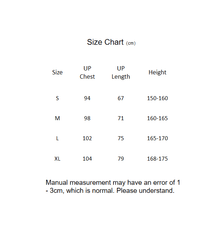
Size Guide
Understanding Mylulusstore Sizing


Description
xMing Dynasty Clothing Shape and Structure: A Blend of Innovation and Practicality
women’s hanfu saw key structural advancements: standing collars (vertical collars) emerged amid the Little Ice Age’s cold, fitted with metal or button loops to wrap the neck for warmth, becoming a signature design. As the core skirt style, Mamianqun (horse-face skirts) had overlapping front-back panels forming a "horse-face" shape, with side pleats for mobility and decorated hem bands—e.g., the gold-threaded nine-dragon embroidery on Empress Xiaojing’s (Dingling Mausoleum) "Hundred Boys Robe" skirt bands signified nobility. Complementing these, the "cross-shaped" flat cutting technique was retained, featuring wide sleeves with narrow cuffs and slit hems with gussets; the shoulder-over dividing line on Empress Xiaojing’s robe, for example, created an elegant A-line silhouette.
Ming Dynasty Clothing Decoration: Integration of Craftsmanship and Symbolism
In terms of decoration, royal noblewomen used high-end fabrics like brocade, kesi (silk tapestry) and zhuanghua luo (patterned gauze), adorned with gold-woven embroidery, while commoners mainly wore cotton, supplemented by zhusi (fine silk) and lingluo (damask gauze). Patterns followed the "every pattern has a meaning" principle—cloud motifs, interlocking branch patterns paired with phoenixes, peacocks and flowers were common; for example, the yellow satin quilt embroidered with flowers and peacocks (collected in Shandong Museum) symbolized "prosperity throughout the four seasons". Exclusive accessories included xiapei (a decorative shawl for noblewomen), exclusive to imperial consorts with rank-specific patterns like zhai (pheasant) or peacock motifs, and "jinbu" (a pendant made of gold, jade, pearls and jadeite) that hung from the chest, producing a tinkling sound while walking and serving both decorative and ritual purposes.
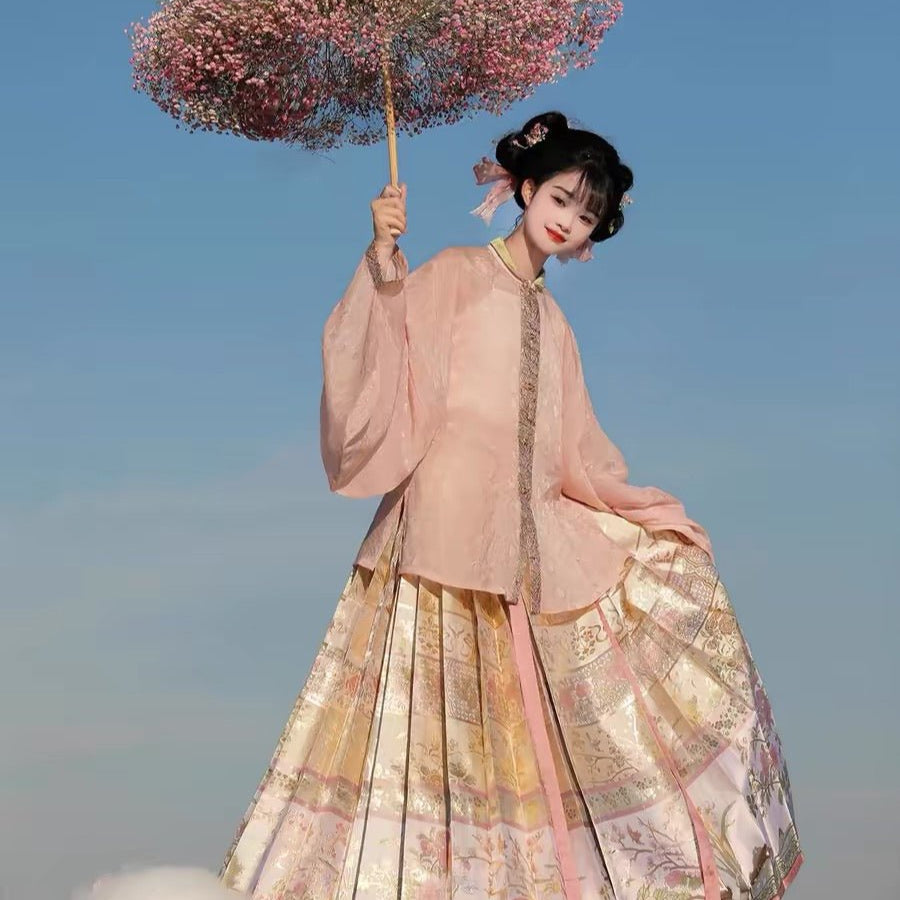
Ming Dynasty Clothing Pink Hanfu Duijin Shirt
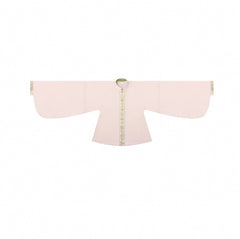
This Ming Dynasty women's pink standing-collar pipa-sleeve duijin (front-opening) shirt radiates gentle elegance. Made of jacquard gauze with subtle patterns, it boasts clear and delicate motifs, a draping and smooth texture, and seems to have light flowing gracefully under illumination. The standing collar is adorned with buttons crafted from pink gemstones and metal, while the front placket and cuffs are trimmed with custom fabric, adding a touch of lively brightness to the pale pink outer garment. Since the duijin shirt is rather thin, it is best to wear a camisole, a base layer, or layer it with other Hanfu to better highlight the beauty of layering.

About The Brand: 无贰集
A Haven for 208,000 Hanfu Aficionados Seeking Original Design Charm
Featured Products: Blending Time-Honored Aesthetics with Contemporary Wearability
- Choosing a selection results in a full page refresh.